
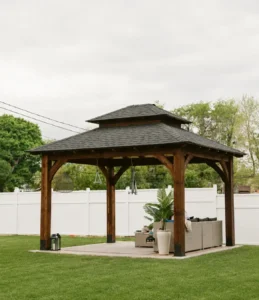
Pergola vs. Gazebo: Which One Actually Fits a Canadian Backyard
Planning a backyard upgrade in Canada usually brings homeowners to the same crossroads: a pergola or a gazebo. The pergola vs gazebo question looks simple




Outdoor living in Canada continues to evolve beyond seasonal patios and temporary shade solutions. Homeowners are increasingly approaching backyard upgrades as a full backyard makeover, recognizing that climate conditions demand more than decorative enhancements. Heavy snow accumulation, freeze-thaw cycles, intense UV exposure and shifting rainfall patterns are shaping how outdoor structures, materials and systems like outdoor lighting and outdoor kitchens are integrated.
In 2026, outdoor spaces are defined by structural permanence, functionality and thoughtful design. Expert pavilion design provides the backbone for multi-purpose outdoor rooms, while layered outdoor lighting and well-planned outdoor kitchens enhance usability year-round. Homeowners are building cohesive, durable environments that combine aesthetics, comfort and performance, the foundation of a modern Canadian backyard makeover.
Below are the defining outdoor living trends shaping Canada in 2026.
Timber frame construction is increasingly central to high-impact backyard makeovers. Unlike lightweight aluminum pergolas or seasonal shade covers, engineered timber pavilions offer substantial posts, exposed beams and clearly defined rooflines. This pavilion design provides both structural integrity and visual elegance, creating a striking focal point in the backyard while supporting integrated outdoor lighting and entertaining areas.
Performance and longevity are just as important as aesthetics. Properly engineered timber withstands Canadian snow loads and seasonal expansion, allowing wide, open layouts underneath. These spaces provide flexibility for dining setups, lounging zones and outdoor kitchens, making timber framing a long-term solution for homeowners seeking durable and stylish backyard makeovers.
Gone are the days of summer-only patios. Homeowners are embracing pavilion design that allows outdoor spaces to function throughout the year. Solid roofing and well-engineered structures protect furniture, outdoor kitchens and integrated outdoor lighting from the harsh Canadian elements, ensuring usability in rain, snow or intense sunlight.
Integrated climate solutions such as infrared heaters and strategic wind protection extend the usability of these spaces into the colder months. Roof pitch and drainage systems are planned during construction to handle snow accumulation efficiently. Today’s backyard makeover is as much about winter comfort as it is about summer enjoyment, creating an outdoor room that truly lasts year-round.
Modern backyard layouts prioritize entertainment and flow. Well-designed pavilion design creates defined zones for dining, lounging and cooking. Dining tables are placed beneath timber structures with integrated outdoor lighting, while lounge areas feature built-in seating and fire elements. These arrangements allow multiple activities to occur simultaneously without crowding the space.
Fully equipped outdoor kitchens are increasingly integrated into entertainment areas, complete with storage, prep surfaces and durable finishes. Concealed wiring within timber beams enables layered outdoor lighting and sound systems, ensuring a seamless experience. These functional layouts elevate a backyard from a casual patio to a cohesive backyard makeover optimized for hosting year-round.
Material selection reflects both style and durability. Warm timber tones in pavilion design are paired with natural stone, matte metal accents and neutral-toned furniture, creating a harmonious and balanced visual aesthetic. This simplicity ensures that outdoor kitchens and integrated outdoor lighting complement the overall design rather than compete with it.
Durable materials are chosen to withstand Canadian conditions, including freeze-thaw cycles, UV exposure and heavy precipitation. Composite decking, sealed stone countertops and powder-coated hardware minimize maintenance and preserve aesthetics. A cohesive palette allows every element of a backyard makeover to work together seamlessly, balancing beauty and performance.
Wellness features are no longer afterthoughts, they are integrated into comprehensive backyard makeovers. Covered hot tubs under thoughtful pavilion design provide protection from weather while creating intimate zones. Saunas, cold plunge areas and dedicated yoga spaces enhance the backyard’s utility, supported by proper ventilation and safe electrical planning.
Privacy screens, natural materials and subtle outdoor lighting create a relaxing atmosphere while maintaining connection to the rest of the outdoor space. Wellness features are coordinated with functional elements like outdoor kitchens, fire tables and lounge areas, resulting in a backyard that supports health, relaxation and entertaining all in one.
Outdoor lighting in 2026 goes beyond decoration. Recessed fixtures within timber beams, step lights along pathways and subtle perimeter lighting enhance both safety and ambiance. When integrated as part of the pavilion design, lighting reinforces the structure’s architectural depth and visual appeal.
Strategically placed outdoor lighting ensures functionality for outdoor kitchens, seating areas and entertaining zones after dark. Concealed wiring preserves clean sightlines while enhancing safety, contributing to a polished and cohesive backyard makeover. Layered lighting transforms outdoor spaces into functional, inviting environments at night.
Landscaping is becoming a core element of backyard makeovers. Native and drought-tolerant plants are selected for resilience and minimal irrigation needs, while layered shrubs, perennials and grasses create year-round visual interest. These plantings complement pavilion design and protect structures and outdoor kitchens from harsh environmental exposure.
Drainage planning is integrated into the overall layout, using permeable surfaces and graded planting beds to prevent water accumulation near timber posts and foundations. Landscape lighting is coordinated with outdoor lighting in patios and pathways, enhancing nighttime usability. The result is a unified environment where structure, planting and functional elements coexist seamlessly.
Also Read: Designing a Pavilion That Handles Canadian Weather Better Than a Gazebo
Urban homes benefit from precise, high-impact pavilion design. Even smaller yards can achieve a full backyard makeover by strategically placing a timber pavilion to define dining or lounge zones. Overhead coverage adds vertical interest, making compact spaces feel larger and more intentional.
Efficiency is maximized with built-in seating, multifunctional furniture and vertical garden walls, while integrated outdoor lighting ensures usability after dark. Outdoor kitchens can also be scaled to suit limited footprints without compromising style or functionality. Thoughtful design allows small yards to perform like large outdoor rooms.
Also Read: Why Outdoor Pavilions Outlast Gazebos in Canadian Backyards
Outdoor living in Canada for 2026 is defined by structural permanence, climate awareness and integrated functionality. Strong pavilion design serves as the foundation for layered outdoor lighting, durable outdoor kitchens and intentional layouts that transform a simple yard into a complete backyard makeover. Every element works together to ensure year-round performance, safety and visual impact.
Bring your outdoor space to life with expert craftsmanship and thoughtful design. At NORWEH Timber Frame, we specialise in high-quality timber structures built to perform through every Canadian season. Reach out today to start planning a backyard makeover that combines lasting beauty with real-world functionality.
Planning a backyard upgrade in Canada usually brings homeowners to the same crossroads: a pergola or a gazebo. The pergola vs gazebo question looks simple
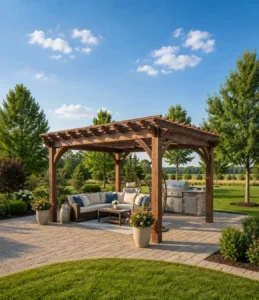
Thousands of Canadian homeowners type “pergola with a roof” into a search bar every year, and most of them are not really looking for a
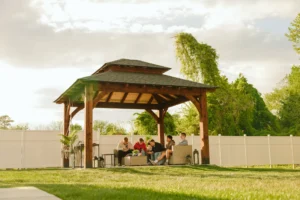
Two of the most popular outdoor structures in Canadian backyards are the pergola and the timber frame pavilion, and both are genuinely excellent choices depending
It looks like you're visiting from the United States. We have a dedicated US site for you.
Take me to the US site