
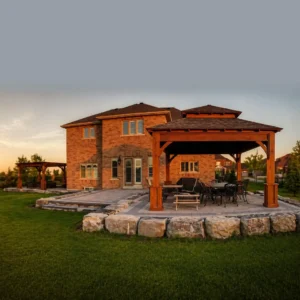
Four-Season Pavilions: Using Your Outdoor Space Through a Canadian Winter
For years, the Canadian backyard followed a predictable rhythm: it opened in late spring, ran hard through summer, and closed down at the first hard




Planning a backyard upgrade in Canada usually brings homeowners to the same crossroads: a pergola or a gazebo. The pergola vs gazebo question looks simple on the surface, yet the two structures serve genuinely different purposes, and the right answer depends heavily on how our climate treats them. A choice that suits a mild patio in one season can become a maintenance headache once heavy snow, freeze-thaw cycles, and strong winds arrive.
This guide compares the two structures across the factors that actually matter in a Canadian backyard: how they are built, how they handle winter, how long they last, and how you will use them day to day. By the end, the decision should feel clear rather than confusing, whether you lean toward a wood pergola, a gazebo, or a fuller-coverage option.
A pergola is an open-roofed structure with rafters or slats overhead that define a space and filter sunlight, while a gazebo is an enclosed structure, usually octagonal or round, with a solid peaked roof and often built-in railings. The core distinction is coverage: a pergola frames an outdoor room and shapes light, whereas a gazebo creates a sheltered, self-contained pocket in the yard.
That difference in form leads to a difference in feeling. A pergola reads as an extension of the patio, open on all sides and easy to furnish as a dining or lounge area that flows into the rest of the yard. A gazebo reads as a destination, a standalone focal point you walk out to rather than live around. Neither is inherently better, but understanding the gazebo vs pergola contrast in purpose is the first step to choosing the one your backyard will actually use.
The deciding factor in most Canadian yards is snow load, and it favours structures that are engineered for it rather than assembled from lightweight kits. A gazebo’s solid roof sheds rain well, but a cheap prefab model with undersized framing can struggle under heavy snow accumulation. A pergola’s open roof carries far less snow by design, though a poorly built one still sags or twists through repeated freeze-thaw cycles.
What matters more than the shape is the engineering behind it. Canadian conditions often call for heavier framing and closer rafter spacing than a mild climate would, along with proper footings that resist frost heave. A structure built from substantial timber and set on a stable foundation performs reliably through winter after winter, while a light aluminum or thin-wood kit tends to reveal its limits in the first serious storm. This is why the material and build quality, not simply the pergola vs gazebo label, should drive the decision.
Also Read: Outdoor Living: Canadian Backyard Ideas
A well-built wood pergola made from heavy timber typically outlasts a mass-produced gazebo, because durability comes down to material grade and joinery rather than roof style. Many retail gazebos rely on thin metal or softwood and bracket connections that loosen over time, whereas a timber frame structure built with mortise and tenon joinery holds its integrity for decades.
Wood also ages in a way that suits a Canadian backyard. A premium species such as Douglas Fir, properly finished, resists warping and cracking and develops a patina that looks better with time rather than worse. The NORWEH Timber Frame Pergola is built on exactly these principles: Grade No. 1 structural Douglas Fir, precision-cut components, and a design engineered to stand up to real Canadian weather. For a homeowner weighing long-term value, a heavy timber wood pergola is the more dependable investment, and it avoids the slow decline that makes many gazebos feel dated within a few seasons.
Use is where the pergola vs gazebo choice becomes personal, because each structure encourages a different kind of outdoor living. A pergola suits homeowners who want a defined outdoor room for dining, lounging, or entertaining, one that stays open to the yard and connects naturally to a patio, kitchen, or pool area. It is the structure you build your everyday outdoor life around.
A gazebo suits a different intention. Its enclosed form makes it a quiet retreat set apart from the main flow of the yard, better suited to a garden corner or a spot by the water than to the centre of an entertaining space. The practical question, then, is whether you want a space you live within day to day or a standalone feature you visit. Answering that honestly usually settles the decision faster than any spec comparison.
If your real goal is reliable shelter from sun, rain, and snow, the structure you actually want is a pavilion rather than either a pergola or a gadget-roof gazebo. A pavilion keeps the open, connected feel of a pergola but adds a solid, permanent roof engineered for year-round use, which is what makes it so well suited to Canadian conditions.
This is the natural upgrade path for homeowners who love the pergola concept but want to use the space in every season. A timber frame pavilion delivers the same heavy timber craftsmanship and clean architectural lines, with a roof built to shed snow and keep the space usable when the weather turns. If a pergola defines the room and a gazebo tucks away in the corner, a pavilion is the structure that lets you host dinner outdoors in October without watching the forecast.
Also Read: DIY Patio Projects: Timber Frame Kits in Canada
The best choice is the structure that matches how you want to live outdoors, sized for the full range of uses it will serve over its lifetime rather than only today’s need. A pergola is ideal for a defined, open-air room and filtered shade. A pavilion is the answer when year-round coverage matters. A gazebo works when you want a separate, enclosed focal point, though in most Canadian yards a heavy timber pergola or pavilion delivers more usable value.
NORWEH Timber Frame offers a purpose-built range to suit different properties and budgets. For an open-air room and shade, the NORWEH Timber Frame Pergola is precision-crafted and easy to assemble. For full overhead coverage, the Heavy Timber pavilion range offers four roof configurations: the Hip Roof HT, the Double Hip Roof HT, the Two Gable HT, and the Three Gable HT. Every structure is built from Grade No. 1 structural Douglas Fir, arrives pre-cut and engineer-approved, and is backed by free shipping across Canada, a 10-year guarantee, and a 100-day risk-free trial.
The pergola vs gazebo decision comes down to how you want to live in your backyard and how well the structure stands up to a Canadian winter. A wood pergola gives you an open, connected outdoor room built to last, a pavilion adds year-round coverage, and a gazebo suits a quieter, separate corner. Matching the structure to your real use and to our climate is what turns a good backyard into one you use in every season.
Explore the full NORWEH timber frame pavilion range and the timber frame pergola to find the structure that fits your property and your Canadian conditions.
A pergola is an open-roofed structure with overhead rafters or slats that filter sunlight and define an outdoor room, while a gazebo is an enclosed structure with a solid peaked roof, usually octagonal or round. A pergola stays open to the yard, whereas a gazebo forms a sheltered, self-contained pocket.
A heavy timber wood pergola generally lasts longer than a mass-produced gazebo, because durability depends on material grade and joinery rather than roof shape. A structure built from Grade No. 1 Douglas Fir with mortise and tenon joinery holds up through Canadian winters far better than thin metal or softwood kits with bracket connections.
It depends on how the structure is engineered. A pergola’s open roof carries less snow by design, but both structures need substantial framing, correct rafter spacing, and proper footings to resist snow load and frost heave. Lightweight prefab models are the ones most likely to fail in a serious storm.
For most Canadian homeowners, a well-built wood pergola offers stronger long-term value, since it delivers a usable outdoor room and decades of durability without the maintenance decline common to retail gazebos. If year-round shelter is the priority, a pavilion adds a solid roof while keeping that open, connected feel.
Choose a pergola for an open-air room and filtered shade, a gazebo for a separate enclosed retreat, and a pavilion when you want full overhead coverage for year-round use. In most Canadian backyards, a heavy timber pergola or pavilion delivers more everyday value than a gazebo.
For years, the Canadian backyard followed a predictable rhythm: it opened in late spring, ran hard through summer, and closed down at the first hard
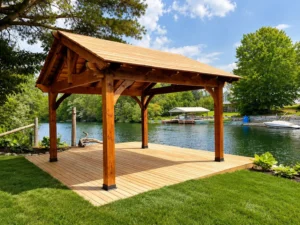
When a homeowner starts comparing backyard structures, the conversation usually centers on style, size, and price, while the single factor that decides how long the
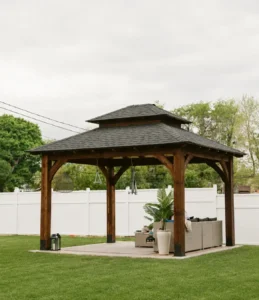
Planning a backyard upgrade in Canada usually brings homeowners to the same crossroads: a pergola or a gazebo. The pergola vs gazebo question looks simple
It looks like you're visiting from the United States. We have a dedicated US site for you.
Take me to the US site